


Separation or divorce can be a difficult time for any family, especially when children are involved. One of the most important steps you can take to support your child during this transition is to create a well-structured child contact schedule (often called a parenting plan in South Africa).
A good parenting plan does more than decide where your child will live. It creates stability, predictability, and clarity for both parents — and most importantly, a secure environment for your child to thrive.
🇿🇦 Understanding Child Care and contact in South Africa
In South Africa, the law focuses on the best interests of the child, as set out in the Children’s Act 38 of 2005. This means care and contact arrangements should prioritise your child’s emotional, physical, and educational needs above all else.
Care and contact may be shared between parents or primarily with one parent, depending on the circumstances. Many families formalise their arrangements through a parenting plan, which can be drafted with the help of a mediator, lawyer, or family advocate and made an order of court.
A clear parenting plan can help reduce conflict, set healthy boundaries, and protect your child’s routine and sense of security.
📝 Key Elements to Include in a Parenting Plan
Every family is different, but a comprehensive parenting plan should cover practical details that help prevent confusion and conflict later on:
- 🏡 Primary residence – Where your child will spend most of their time.
- ⏰ Time with each parent – How parenting time is divided between homes.
- 🧭 Work and school schedules – Aligning contact with your work hours and your child’s school routine.
- 🏫 Extracurricular activities – Sports, hobbies, and after-school commitments.
- 🔁 Changeovers – When, where, and how handovers between parents will happen.
- 📞 Communication – How parents and children will stay in touch when apart (e.g., calls, WhatsApp, video calls).
- 🎉 Special occasions – How birthdays, public holidays, religious celebrations, and family events will be shared.
- 👨👩👧 Extended family – Maintaining meaningful contact with grandparents and other loved ones.
- ⚡ Emergency plans – How unexpected events like illness or accidents will be handled.
- 💰 Financial responsibilities – How costs like school fees, medical aid, and activities will be shared.
- 🧠 Decision-making – How parents will make major decisions (education, healthcare, religion).
- 💬 Parent-to-parent communication – Clear, respectful communication channels to prevent unnecessary conflict.
Having these details agreed upon and documented helps everyone know where they stand — and puts the child’s needs at the center of the arrangement.
🧒 Schedules by Age: What Works Best for Different Stages
Your child’s age and developmental stage play a huge role in what type of schedule will work best. While every family situation is unique, these general guidelines can help shape your parenting plan.
👶
Infants
(0–1 year)
- Babies rely on routine and need regular contact with both parents to bond.
- Long separations can be unsettling, so short, frequent visits with the non-primary parent work best.
- Overnight stays can be introduced gradually once the baby is comfortable.
Example schedule: One parent has primary care; the other has multiple daytime visits each week.
Toddlers
(1–3 years)
- Babies rely on routine and need regular contact with both parents to bond.
- Long separations can be unsettling, so short, frequent visits with the non-primary parent work best.
- Overnight stays can be introduced gradually once the baby is comfortable.
Example schedule: One parent has primary care; the other has multiple daytime visits each week.
School-Age Children
(4–11 years)
- Kids in this age group can handle longer separations and more structured routines.
- Custody can be planned around school, homework, sports, and after-school activities.
- Communication between parents is essential to avoid scheduling conflicts.
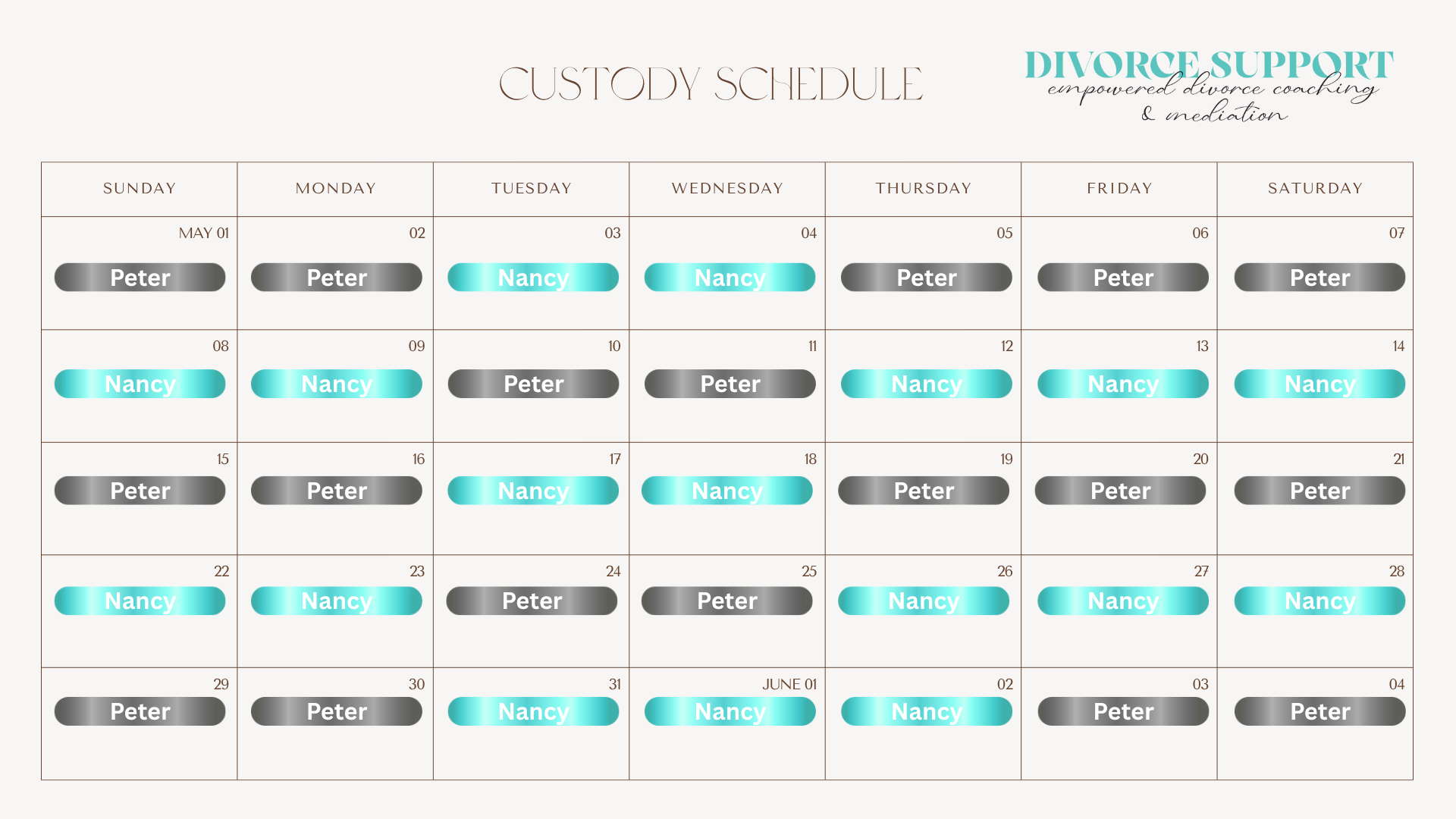
Example schedule: A 3-3-4-4 rotation works well for many families, allowing both parents consistent time with their children.
Teenagers
(12–17 years)
- Teenagers have busy lives — school, friends, sports, and part-time work.
- It’s best to involve teens in the custody planning process and respect their preferences.
- Flexibility is important at this stage.
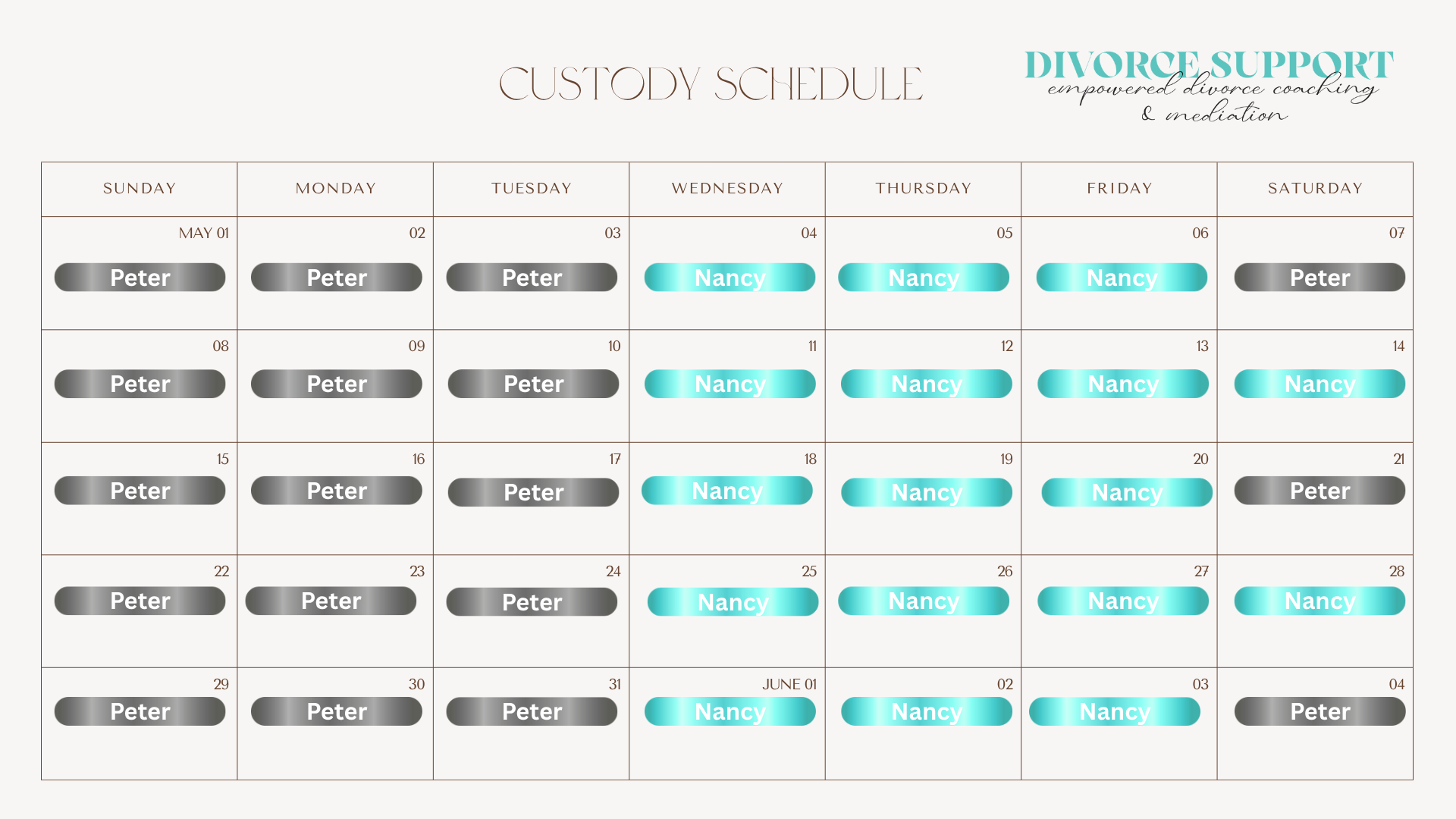
Example schedule: Alternating weeks with optional mid-week visits or shared dinners.
🕒 Common Schedules Options in South Africa
There’s no one-size-fits-all solution. The right plan is the one that works best for your child and fits your family dynamic. Here are some common arrangements:
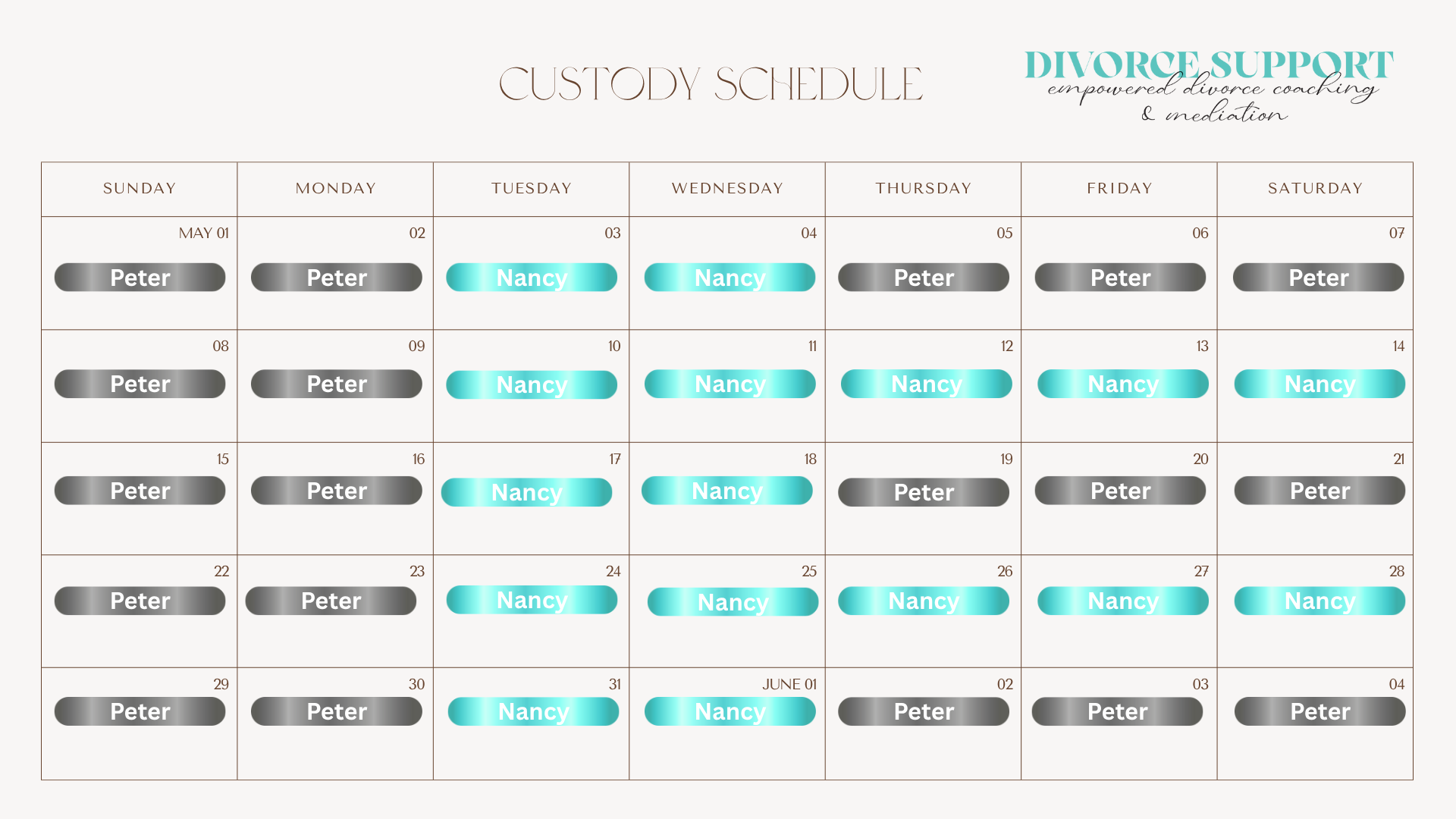
- Week-on / Week-off: Ideal for older children who can manage longer stretches in each home. Many families add a mid-week visit or overnight stay.
- 2-2-5-5 Schedule: Two days with each parent, then five with each. This creates a steady rhythm and allows for shared weekends.
- Split weekends: Helpful when parents have different work hours or travel schedules.
- Hybrid schedules: Combining different models for different stages or needs.
🧠 Tips for Creating a Sustainable Parenting Plan
- Keep your child’s best interests at the centre – not personal conflict.
- Be realistic about work commitments, travel, and daily routines.
- Prioritise clear communication – misunderstandings often cause unnecessary stress.
- Put everything in writing – informal arrangements can create confusion.
- Be flexible – children’s needs change over time, and so should the plan.
- Review the plan regularly as your child grows.
- Get professional help from mediators, lawyers, or the Office of the Family Advocate if needed.
⚖️ Legal Considerations in South Africa
In South Africa, a parenting plan can be made legally binding by registering it with the Office of the Family Advocate or making it an order of the court. This provides legal clarity and protection for both parents and children.
Even if relations between parents are amicable, formalising the plan ensures consistency, helps resolve future disputes, and safeguards your child’s best interests.
❤️ Final Thoughts: Building a Schedule That Works
A contact schedule is more than just logistics — it’s the foundation for your new co-parenting relationship. A clear and thoughtful plan creates a stable environment for your child, reduces conflict, and allows both parents to remain actively involved in their child’s life.
Every family is unique. There’s no perfect formula, but when you prioritise your child’s well-being, communicate openly, and create a flexible structure, co-parenting can work — and your child can thrive.
👉 If you need help drafting or reviewing a parenting plan in South Africa, consider working with a qualified family lawyer, mediator, or the Family Advocate’s Office. Professional support can make the process smoother and ensure your child’s best interests are always at the heart of your decisions.
Need Guidance? Reach Out to Me
Navigating care and contact and co-parenting can be overwhelming — but you don’t have to do it alone. I work with parents to help design practical, age-appropriate parenting plans that put your child first while protecting your rights and responsibilities as a parent.
Reach out to me for personal guidance, mediation support, or to help draft a clear parenting plan tailored to your family’s needs.